

Premium aesthetic, laser, skincare, and dental care in Dubai, combining advanced technology with personalised patient care.
Premium aesthetic, laser, skincare, and dental care in Dubai, combining advanced technology with personalised patient care.
Dental Cosmetics Services
Book Appointment
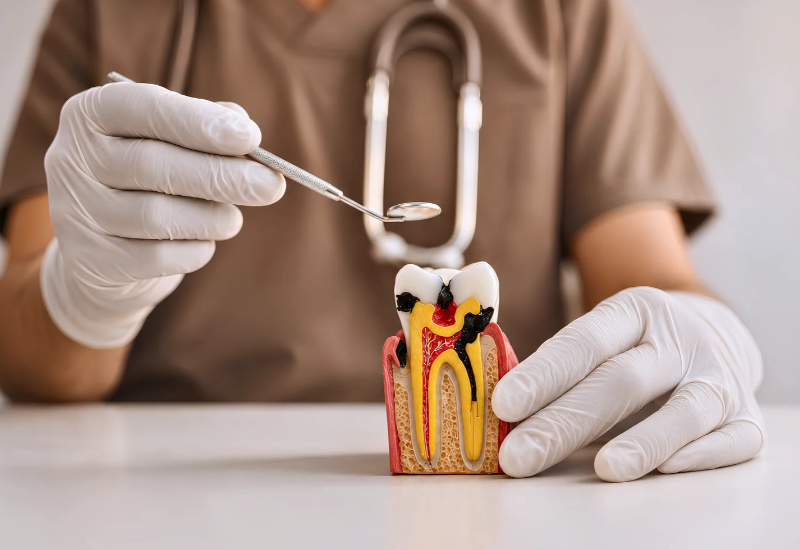
Root Canal Treatment in Dubai
Save Your Natural Tooth with Root Canal Treatment
Root Canal Treatment (RCT) helps treat infection or damage inside a tooth while preserving your natural tooth structure. At Opal Elite Clinic, root canal treatment is performed to address dental pain, remove infected tissue and help restore the function and health of your tooth.
If you’re experiencing persistent toothache, sensitivity or discomfort when chewing, a dental assessment can help determine whether root canal treatment is needed.
What Is Root Canal Treatment?
Root Canal Treatment, also known as RCT or endodontic treatment, is a dental procedure designed to treat infection, inflammation or damage affecting the pulp inside a tooth.
The dental pulp contains nerves, blood vessels and connective tissue. When it becomes infected or irreversibly damaged due to deep decay, trauma or cracks, root canal treatment may be recommended to remove the affected tissue
During the procedure, the dentist cleans and disinfects the internal root canals, fills them and seals the tooth to help prevent further infection. A filling or dental crown may subsequently be needed to restore the tooth’s strength and function.
Root Canal Treatment at a Glance
| Treatment Detail | Description |
|---|---|
| Treatment | Root Canal Treatment (RCT) |
| Purpose | Treat infected or damaged dental pulp |
| Anaesthesia | Local anaesthesia |
| Sessions | One or more appointments |
| Recovery | Mild tenderness may occur for a few days |
| Restoration | Filling or crown, depending on the tooth |
| Goal | Preserve and restore the natural tooth |
Benefits of Root Canal Treatment
Root canal treatment can help preserve your natural tooth and address dental problems that might otherwise require extraction.
- Relief from dental pain: Treats the underlying pulp inflammation or infection responsible for tooth discomfort.
- Preservation of your natural tooth: Helps retain your own tooth instead of removing it when it can be successfully restored.
- Restored chewing function: Following appropriate restoration, the treated tooth can function during everyday chewing.
- Removal of infected tissue: Cleans and disinfects the root canal system to manage infection.
- Maintaining your natural smile: Preserving a tooth can help maintain the natural arrangement of your teeth.
- Long-term tooth preservation: With appropriate restoration, oral hygiene and follow-up care, a root-treated tooth may remain functional for many years.
Signs You May Need Root Canal Treatment
Section subtitle: Recognise the symptoms before the problem progresses.
A tooth with damaged or infected pulp may show different symptoms. While some patients experience intense pain, others may notice only mild discomfort or no symptoms at all.
Persistent Toothache
Pain that continues, occurs spontaneously or interrupts your daily activities.
Sensitivity to Hot or Cold
Sensitivity that lingers after exposure to hot or cold foods and drinks.
Pain When Biting
Discomfort or tenderness while chewing or putting pressure on a tooth.
Swelling Around the Tooth
Swelling, tenderness or a small pimple-like bump on the gum near the affected tooth.
Tooth Discolouration
Darkening of a tooth, particularly following trauma or injury.
Deep Decay or Cracks
Significant decay, a fractured tooth or damage that may affect the pulp.
These symptoms do not necessarily mean you need root canal treatment. A dental examination and appropriate imaging are needed to establish the diagnosis.
How Is Root Canal Treatment Performed?
Section subtitle: A step-by-step approach to treating the affected tooth.
- Dental Examination & Diagnosis : Your dentist examines the affected tooth, evaluates your symptoms and may take dental X-rays to assess the pulp and surrounding structures.
- Local Anaesthesia: Local anaesthesia is administered to numb the affected area and help make the procedure more comfortable.
- Access to the Tooth: A small opening is made in the tooth to access the damaged or infected pulp and the root canal system.
- Cleaning & Disinfection :The affected pulp is removed, and the canals are carefully cleaned, shaped and disinfected.
- Filling & Sealing: The cleaned canals are filled with a suitable material and sealed to help prevent bacteria from entering again.
- Final Tooth Restoration: A filling, onlay or crown may be recommended to restore the tooth and protect it from further damage.
Your Root Canal Treatment Journey
Immediately After Treatment
Your mouth may remain numb for a few hours. Avoid eating until the numbness wears off to prevent accidentally biting your cheek or tongue.
Days 1-3
Mild tenderness or discomfort when biting may occur. Avoid chewing hard foods on the treated tooth and follow your dentist’s instructions.
Days 3-7
Discomfort should generally begin to improve. Continue regular oral hygiene and contact your dentist if symptoms worsen or swelling develops.
After Final Restoration
Once the tooth has been properly restored, you can gradually return to normal chewing. Attend follow-up appointments as recommended.
Aftercare Following Root Canal Treatment
Proper aftercare helps protect your treated tooth while it heals and awaits its final restoration, if required.
- Avoid chewing hard or sticky foods on the treated tooth until it has been permanently restored.
- Wait until the local anaesthesia wears off before eating.
- Brush and floss carefully while maintaining your regular oral hygiene routine.
- Take prescribed or recommended medication only as directed by your dentist.
- Attend your scheduled follow-up appointment for restoration or assessment.
- Contact your dentist if you experience increasing pain, swelling, persistent discomfort or a temporary filling that comes loose.
If swelling spreads to your face or neck, or you experience difficulty breathing or swallowing, seek urgent medical care.
Why Choose Opal Elite Clinic for Root Canal Treatment?
At Opal Elite Clinic, dental treatment is approached with a focus on patient comfort, individual assessment and preserving natural teeth wherever clinically possible.
- Personalised dental assessment: Treatment recommendations based on your dental condition and needs.
- Focus on tooth preservation: Exploring suitable options to help retain your natural tooth.
- Patient-focused care: Clear communication throughout your treatment journey.
- Restorative approach: Planning appropriate restoration to help protect the treated tooth.
- Individualised treatment planning: Recommendations based on tooth condition, symptoms and clinical findings.
Suggested section visual: Dentist performing RCT in a modern dental treatment room, with a natural, professional clinical image.
Frequently Asked Questions About Root Canal Treatment
Is Root Canal Treatment painful?
Root Canal Treatment is performed under local anaesthesia to numb the affected tooth and surrounding area. Most patients tolerate the procedure well. Some tenderness or discomfort may occur after treatment but usually improves over time.
How many appointments are required for RCT?
Root Canal Treatment may be completed in one appointment or require multiple visits. The number of sessions depends on the tooth, canal anatomy, infection and complexity of the treatment.
How long does a Root Canal Treatment take?
The appointment duration varies depending on the tooth and its complexity. Some procedures may take approximately 60–90 minutes or longer, and additional appointments may be required.
Is laser gum treatment suitable for a gummy smile?
Laser gum contouring may be suitable for individuals whose gummy smile is primarily caused by excess gum tissue covering the teeth. However, a gummy smile can also result from lip movement, tooth position or underlying bone structure. Your dentist will assess the cause before recommending treatment.
Can Root Canal Treatment save my natural tooth?
In many cases, RCT can help preserve a tooth that would otherwise require extraction. However, the tooth must have sufficient structure and be suitable for restoration.
Do I need a crown after Root Canal Treatment?
A crown is often recommended for teeth that have lost substantial structure, particularly back teeth. Your dentist will assess the tooth and recommend the most appropriate restoration.
How long does recovery take after RCT?
Mild tenderness may last for a few days. Recovery varies depending on the original condition of the tooth and the complexity of treatment. Persistent or worsening symptoms should be evaluated.
What happens if I delay Root Canal Treatment?
If an infected or irreversibly damaged pulp is left untreated, the infection may worsen, cause an abscess, damage surrounding tissues or eventually lead to tooth loss. Early dental assessment is recommended.
Can a tooth become infected again after RCT?
Yes. Reinfection can occur if bacteria enter the tooth through new decay, cracks or a damaged restoration. Further treatment may be necessary depending on the condition of the tooth
Can I eat after Root Canal Treatment?
You can eat once the anaesthesia has worn off. However, avoid chewing hard foods on the treated tooth until your dentist has completed the recommended restoration.
Restore Your Tooth & Relieve Dental Discomfort
Don’t let persistent dental pain interfere with your everyday life. Root Canal Treatment may help address infection, relieve discomfort and preserve your natural tooth when appropriate.
Book your consultation at Opal Elite Clinic and take the next step towards healthier teeth.