Premium aesthetic, laser, skincare, and dental care in Dubai, combining advanced technology with personalised patient care.
Premium aesthetic, laser, skincare, and dental care in Dubai, combining advanced technology with personalised patient care.
Skin & Hair Services
Book Appointment
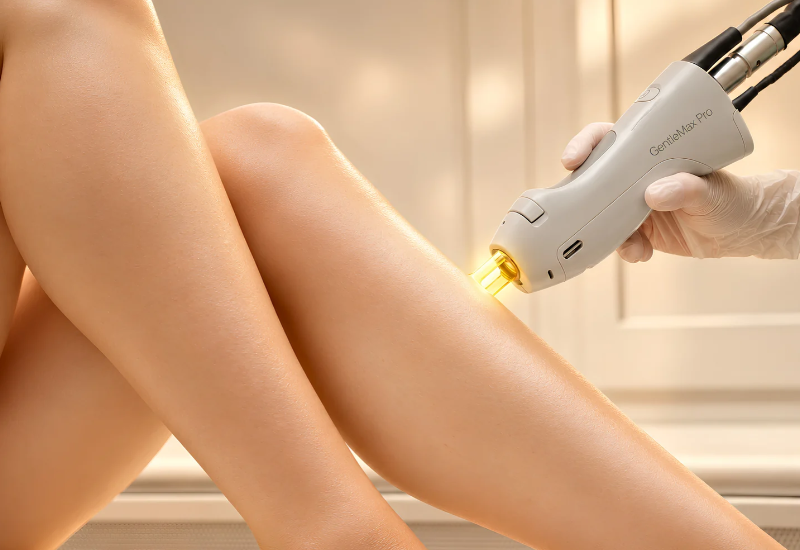
Candela GentleMax Pro Laser Hair Removal in Dubai
Unwanted facial and body hair can require frequent maintenance through shaving, waxing and other temporary hair-removal methods. These methods may also contribute to skin irritation, razor bumps and ingrown hairs.
Candela GentleMax Pro is a professional laser platform designed to provide long-term hair reduction using two laser wavelengths: 755 nm Alexandrite and 1064 nm Nd:YAG.
The availability of both wavelengths allows the practitioner to select an appropriate treatment approach according to your skin tone, hair characteristics and clinical requirements. The system also features a Dynamic Cooling Device designed to cool the skin around each laser pulse.
At Opal Elite Clinic, a Candela GentleMax Pro treatment plan should begin with a professional assessment to determine whether the technology is suitable for your skin and hair type.
Whether you want to reduce unwanted hair on your face, underarms, arms, legs, back or other suitable areas, personalised treatment planning is important for achieving appropriate results while managing potential risks.
Book a consultation at Opal Elite Clinic to explore Candela GentleMax Pro laser hair removal.
What Is Candela GentleMax Pro?
Candela GentleMax Pro is a professional aesthetic laser system manufactured by Candela. It combines two established laser technologies in one platform:
Alexandrite laser – 755 nm: A wavelength with strong absorption by melanin, commonly selected for suitable lighter skin tones.
Nd:YAG laser – 1064 nm: A longer wavelength that penetrates more deeply and is generally preferred for appropriately assessed darker skin tones.
Both wavelengths can be used for laser hair reduction. The practitioner selects the appropriate wavelength and treatment parameters according to the patient’s skin type, hair characteristics and treatment area.
GentleMax Pro also incorporates Candela’s Dynamic Cooling Device (DCD), which delivers a controlled burst of cryogen cooling before each laser pulse.
The treatment objective is long-term reduction in hair growth. It should not be presented as a guarantee that every hair will be permanently removed.
How Does Candela GentleMax Pro Work?
GentleMax Pro uses a process known as selective photothermolysis. This involves directing controlled laser energy towards pigment in the hair follicle and converting the absorbed energy into heat.
The heat affects structures involved in hair growth while the practitioner uses suitable settings and cooling measures to help protect the surrounding skin.
1. Laser Energy Targets Hair Pigment
The selected laser wavelength is absorbed by melanin in the hair. The amount of pigment, hair thickness and contrast between hair and skin influence treatment response.
2. Heat Reaches the Hair Follicle
The absorbed light energy is converted into heat. This thermal effect damages targeted follicular structures involved in hair growth.
3. Hair Growth Becomes Reduced
Following treatment, some targeted hairs shed. With an appropriate course of sessions, regrowth may become slower, finer or less dense.
4. Cooling Helps Protect the Skin
The Dynamic Cooling Device releases a brief cryogen spray immediately before the laser pulse. This helps cool the skin surface during treatment.
5. Multiple Sessions Address Different Growth Phases
Hair follicles move through different growth phases. Laser treatment is most effective on hairs in a suitable active growth phase, so several appointments are generally required.
Understanding the Two GentleMax Pro Laser Wavelengths
One of the main features of GentleMax Pro is its dual-wavelength design. The two wavelengths have different absorption and penetration characteristics.
755 nm Alexandrite Laser
The Alexandrite wavelength has strong absorption by melanin. It is commonly used for suitable lighter skin tones and can be effective for darker, more pigmented hair.
It may be considered for:
Suitable lighter skin types.
Dark hair with sufficient pigment.
Selected facial and body areas.
Fine or coarse hair, where clinically appropriate.
Because melanin is also present in the skin, this wavelength requires careful selection of settings and patient suitability.
1064 nm Nd:YAG Laser
The Nd:YAG wavelength has lower melanin absorption and greater penetration compared with the Alexandrite wavelength. It is generally preferred when treating appropriately assessed darker skin tones.
It may be considered for:
Darker skin types.
Coarse or dense hair.
Selected facial and body areas.
Patients for whom the Alexandrite wavelength may present a higher epidermal pigment-related risk.
The longer wavelength does not eliminate the possibility of burns or pigmentation changes. Appropriate assessment and treatment parameters remain essential.
Which Wavelength Is Right for You?
There is no single wavelength that is best for everyone. The practitioner should consider:
Fitzpatrick skin type.
Current skin colour and recent tanning.
Hair colour and thickness.
Treatment area.
Previous laser-treatment response.
Medical history and medications.
The device configuration and manufacturer treatment guidance.
The practitioner should determine whether Alexandrite, Nd:YAG or another treatment approach is appropriate. Patients should not select a wavelength based on skin tone alone.
Key Features of Candela GentleMax Pro
Dual-Wavelength Technology
The combination of 755 nm Alexandrite and 1064 nm Nd:YAG allows the practitioner to choose between two different laser wavelengths within one platform.
Dynamic Cooling Device
Candela’s DCD technology delivers a controlled cryogen spray before each laser pulse. This helps cool the skin surface and improve treatment tolerability.
Adjustable Treatment Parameters
The practitioner can adjust relevant treatment settings according to the patient’s skin, hair, treatment area and clinical response.
Multiple Spot Sizes
GentleMax Pro supports different spot sizes depending on the handpiece and system configuration. This provides flexibility for treating different areas.
Professional Laser Platform
The system is designed for clinical use by appropriately trained practitioners who understand laser-tissue interactions and laser safety procedures.
Important: Exact specifications, available handpieces and treatment capabilities should be verified against the specific GentleMax Pro system installed at Opal Elite. GentleMax Pro and GentleMax Pro Plus are different configurations and should not be described as interchangeable.
Benefits of Candela GentleMax Pro Laser Hair Removal
Long-Term Hair Reduction
A suitable course of laser treatments can reduce the amount of hair that regrows. Some patients may require maintenance sessions.
Two Wavelength Options
The dual-wavelength design gives the practitioner flexibility when selecting a treatment approach for different skin tones and hair characteristics.
Treatment for Multiple Body Areas
Depending on clinical suitability, the system can be used for selected facial and body areas.
Reduced Dependence on Shaving and Waxing
As hair growth becomes less dense, some patients may need fewer temporary hair-removal treatments.
May Help Reduce Ingrown Hairs
Reducing hair growth may help some patients who experience recurring ingrown hairs or shaving-related bumps.
Integrated Skin Cooling
The Dynamic Cooling Device is designed to cool the skin around laser delivery and improve treatment comfort.
Personalised Treatment Settings
The practitioner can select treatment parameters according to the patient’s skin and hair characteristics rather than applying the same settings to everyone.
Suitable for Selected Skin Types Across the Fitzpatrick Spectrum
The two wavelengths provide options for treating a broad range of skin tones. However, suitability depends on individual assessment, device configuration and correct treatment technique. No laser treatment is risk-free or automatically suitable for every patient.
What Areas Can Be Treated?
Candela GentleMax Pro may be used for laser hair reduction on selected facial and body areas.
Facial Areas
Upper lip
Chin
Sideburns
Selected cheek areas
Beard line
Neck
Facial hair may be influenced by hormonal factors. The practitioner should assess hair type and distribution before recommending a treatment course.
Upper Body
Underarms
Arms
Shoulders
Chest
Abdomen
Back
Lower Body
Full legs
Thighs
Lower legs
Bikini line
Selected intimate areas, where clinically appropriate
Full-Body Laser Hair Removal
A full-body plan may combine multiple treatment areas. The appointment schedule and duration depend on the number of areas, hair density and the clinic’s treatment protocol.
Treatment-area note: Only list areas that Opal Elite confirms it treats with its installed GentleMax Pro system and approved clinical protocols.
Candela GentleMax Pro for Women
Women may consider laser hair reduction for unwanted facial and body hair.
Commonly requested areas include:
Underarms.
Legs.
Arms.
Bikini line.
Upper lip.
Chin.
Selected facial areas.
Hormonal changes and certain medical conditions can influence hair growth. If hair growth is sudden, excessive or accompanied by other symptoms, medical assessment may be appropriate before starting cosmetic treatment.
Candela GentleMax Pro for Men
Men may choose laser hair reduction to manage unwanted or dense hair growth.
Common treatment requests include:
Beard line.
Neck.
Chest.
Abdomen.
Back.
Shoulders.
Arms.
Legs.
Men with dense or coarse hair may require an individualised treatment schedule. Beard and neck areas can be influenced by ongoing hormonal activity, so maintenance may be necessary.
Who Is a Suitable Candidate?
Candela GentleMax Pro may be suitable for adults who want to reduce unwanted hair and have hair characteristics that respond to laser treatment.
You may be considered for treatment if you:
Have unwanted facial or body hair.
Want to reduce the frequency of shaving or waxing.
Experience recurring ingrown hairs.
Have shaving-related irritation.
Have hair containing sufficient pigment for laser targeting.
Want a professionally supervised hair-reduction programme.
The suitability of the treatment depends on your skin tone, hair colour, hair thickness, medical history and treatment expectations.
Which Hair Colours Respond Best?
Laser hair reduction relies on pigment in the hair follicle.
Dark brown and black hair generally respond better because they contain more melanin for the laser to target.
Very light blonde, white, grey and some red hair may respond poorly or may not be suitable for conventional laser hair removal.
A consultation helps determine whether your hair is likely to respond to treatment.
Who Should Avoid or Postpone Treatment?
Laser hair removal may need to be postponed or avoided in certain circumstances.
These may include:
Active infection or open wounds in the treatment area.
Sunburn or significant skin irritation.
Recent tanning that increases treatment risk.
Certain photosensitising medications.
Certain skin conditions affecting treatment safety.
A history of adverse reactions to laser procedures.
Pregnancy, when elective laser hair removal is generally deferred due to insufficient safety evidence.
Patients should disclose all medications, medical conditions, recent procedures and relevant allergies before treatment.
The practitioner should review the device instructions, clinical contraindications and applicable UAE requirements before proceeding.
What Happens During a Candela GentleMax Pro Treatment?
The treatment process depends on the area being treated and the patient’s clinical assessment.
Step 1: Consultation and Assessment
The practitioner reviews your hair-removal goals, skin tone, hair characteristics, medical history, medications and previous laser treatments.
Recent sun exposure and tanning are also assessed.
Step 2: Treatment Planning
The practitioner determines whether the Alexandrite or Nd:YAG wavelength is more appropriate and selects suitable treatment parameters.
A test spot may be considered when clinically appropriate.
Step 3: Skin Preparation
The treatment area is examined and prepared. Hair is generally shaved before treatment according to the clinic’s instructions.
The skin should be clean and free from products that may interfere with treatment.
Step 4: Protective Eyewear
Appropriate wavelength-specific protective eyewear is provided. Both the patient and personnel in the treatment room must follow the applicable laser eye-safety procedures.
Step 5: Laser Application
The practitioner applies the handpiece to the treatment area and delivers controlled laser pulses.
The DCD system releases a cooling spray around the time of each pulse. You may experience warmth, a snapping sensation or mild stinging.
Step 6: Post-Treatment Assessment
The practitioner checks the treated skin and explains the appropriate aftercare instructions and timing for your next appointment.
How Many Sessions Are Needed?
Laser hair reduction usually requires a course of treatments because hair follicles are not all in the same growth phase at one time.
The number of sessions varies according to:
Treatment area.
Hair colour and thickness.
Hair density.
Skin tone.
Hormonal influences.
Individual response.
Treatment settings and appointment intervals.
Some patients may need approximately 6–8 sessions or more. This is a general estimate rather than a guaranteed treatment plan.
Facial areas and hormonally influenced hair growth may require additional sessions. Your practitioner should assess progress throughout the course and adjust the schedule where appropriate.
When Will You See Results?
Results develop progressively.
After the first session: Some treated hairs may shed over the following days or weeks.
After several sessions: Hair may become finer, less dense or slower to regrow.
After a completed course: Many patients experience a noticeable long-term reduction in hair growth.
Maintenance: Additional sessions may be needed if residual or new hair growth appears.
Individual results vary. Laser hair reduction does not guarantee complete removal of every hair, and hormonal changes can influence future growth.
Recovery and Aftercare
Most patients can return to their usual daily activities after treatment. Temporary skin reactions may occur.
After your session:
Avoid direct sun exposure on the treated area.
Use broad-spectrum sunscreen on exposed treated skin.
Avoid tanning beds and self-tanning products until the skin has settled.
Avoid hot baths, saunas and excessive heat for the period advised.
Avoid strenuous exercise if the treated area remains warm or irritated.
Use a gentle moisturiser or soothing product if recommended.
Avoid waxing, threading and plucking between sessions.
Shaving may generally be resumed once the skin has settled.
Do not scratch, rub or pick at the treated area.
Mild redness, warmth or temporary swelling around hair follicles can occur. Follow your practitioner’s aftercare instructions and contact the clinic if symptoms persist or worsen.
Is Candela GentleMax Pro Suitable for Darker Skin?
One of the distinguishing features of GentleMax Pro is its combination of Alexandrite and Nd:YAG wavelengths.
The 1064 nm Nd:YAG wavelength is generally preferred for appropriately assessed darker skin tones because it has lower absorption by epidermal melanin than the 755 nm Alexandrite wavelength.
This can provide a treatment option for patients who may have a higher risk of pigmentation changes with shorter wavelengths.
However, darker skin still requires careful treatment planning. The risk of burns, blistering and pigmentation changes is not eliminated.
A qualified practitioner should:
Assess the patient’s skin type and current skin colour.
Review recent tanning and sun exposure.
Select an appropriate wavelength and treatment parameters.
Follow the manufacturer’s treatment guidelines.
Consider a test spot where appropriate.
Monitor the skin’s response.
Provide suitable preparation and aftercare instructions.
Do not advertise the treatment as completely safe for every skin tone.
Possible Side Effects and Risks
Candela GentleMax Pro is a professional laser system, but laser hair reduction can cause side effects.
Common Temporary Effects
Mild redness.
Slight swelling around hair follicles.
Warmth or sensitivity.
Temporary itching.
Mild irritation.
Less Common Complications
Burns or blisters.
Changes in skin pigmentation.
Scarring.
Infection.
Eye injury if appropriate laser-safety precautions are not followed.
The risk depends on skin tone, recent tanning, medication use, treatment parameters, practitioner technique and aftercare.
Seek medical assessment if you develop severe pain, blistering, significant swelling, spreading redness or another concerning reaction.
Candela GentleMax Pro vs Diode Laser Hair Removal
Both Alexandrite/Nd:YAG and diode laser systems are used for hair reduction. Their performance depends on the device, wavelength, settings, treatment technique and individual characteristics.
| Feature | Primelase Laser Hair Removal | Shaving | Waxing |
|---|---|---|---|
| Method | Laser energy targets hair follicles | Cuts hair at the skin surface | Removes hair from the root |
| Results | Long-term hair reduction over multiple sessions | Temporary | Temporary |
| Maintenance | Treatment course and possible maintenance | Frequent | Repeated appointments |
| Ingrown hairs | May help reduce recurring ingrown hairs | Can contribute to razor bumps | May cause ingrown hairs |
| Discomfort | Varies by area and sensitivity | Usually minimal | Can be uncomfortable |
| Downtime | Usually limited, with possible temporary redness | Minimal | Temporary redness or irritation may occur |
Candela GentleMax Pro vs IPL Hair Removal
IPL stands for Intense Pulsed Light. Unlike a laser, which delivers light at a specific wavelength, IPL uses a broader spectrum of light.
| Feature | Candela GentleMax Pro | Diode Laser |
|---|---|---|
| Laser technology | Alexandrite and Nd:YAG | Diode laser technology |
| Wavelengths | 755 nm and 1064 nm | Varies by device |
| Skin-tone approach | Two wavelength options for different skin characteristics | Depends on wavelength and device configuration |
| Cooling | Dynamic Cooling Device | Depends on the system |
| Treatment settings | Adjustable according to system and protocol | Varies by system |
| Hair reduction | Long-term reduction with a suitable treatment course | Long-term reduction with a suitable treatment course |
| Suitability | Requires individual assessment | Requires individual assessment |
Why Choose Opal Elite Clinic for Candela GentleMax Pro?
Choosing a laser hair-removal provider involves more than selecting a device. Patient assessment, appropriate settings, operator training and safety procedures are all important.
The consultation at Opal Elite Clinic should focus on:
Individual skin and hair assessment: Reviewing skin tone, hair colour, density and treatment history.
Wavelength selection: Determining whether Alexandrite or Nd:YAG is more appropriate.
Personalised treatment planning: Selecting suitable settings and intervals for the treatment area.
Laser safety: Following appropriate eye protection, equipment and room-safety procedures.
Clear expectations: Explaining likely results, treatment limitations, possible side effects and maintenance needs.
Aftercare guidance: Providing instructions to support skin comfort and recovery.
Opal Elite should confirm its device model, operator qualifications, treatment protocols and available treatment areas before publishing clinic-specific claims.
Frequently Asked Questions About Candela GentleMax Pro in Dubai
What is Candela GentleMax Pro?
Candela GentleMax Pro is a professional dual-wavelength laser platform that combines 755 nm Alexandrite and 1064 nm Nd:YAG technology. It is used for laser hair reduction and other device-approved aesthetic applications.
Is Candela GentleMax Pro a laser or IPL?
It is a laser system, not an IPL device. It uses specific laser wavelengths rather than the broad-spectrum light used by IPL systems.
What are the two wavelengths in GentleMax Pro?
The system combines a 755 nm Alexandrite laser and a 1064 nm Nd:YAG laser.
What is the difference between Alexandrite and Nd:YAG?
Alexandrite has stronger absorption by melanin and is commonly selected for suitable lighter skin tones. Nd:YAG has lower epidermal melanin absorption and is generally preferred for appropriately assessed darker skin tones.
Is GentleMax Pro suitable for dark skin?
The 1064 nm Nd:YAG wavelength can provide an option for darker skin types. Suitability still requires assessment of skin tone, tanning, hair characteristics and medical history.
Does GentleMax Pro work on all hair colours?
It generally works best on pigmented hair, particularly dark brown and black hair. White, grey, very light blonde and some red hair may respond poorly.
Is Candela GentleMax Pro painful?
Comfort varies by person and treatment area. You may experience warmth, mild stinging or a snapping sensation. The Dynamic Cooling Device is designed to cool the skin and improve comfort, but treatment cannot be guaranteed to be painless.
What is the Dynamic Cooling Device?
The Dynamic Cooling Device, or DCD, releases a brief cryogen spray around the time of each laser pulse. It helps cool the skin surface during treatment.
How many sessions are needed?
Some patients require approximately 6–8 sessions or more. The number depends on the treatment area, hair characteristics, hormonal influences and individual response.
How long should I wait between sessions?
Treatment intervals depend on the body area and hair-growth cycle. Your practitioner will recommend an appropriate schedule based on the treatment plan and observed regrowth.
Can men use Candela GentleMax Pro?
Yes. Men may consider treatment for suitable areas such as the beard line, neck, chest, back, shoulders, arms and legs.
Book Your Candela GentleMax Pro Consultation at Opal Elite Clinic
Explore a personalised approach to long-term hair reduction with Candela GentleMax Pro laser technology.
Whether you want to address unwanted facial hair or selected body areas, treatment should begin with an assessment of your skin tone, hair characteristics and individual goals.
Discover the laser hair-removal options available at Opal Elite Clinic in Dubai.
Book your consultation today and take the next step towards smoother-looking skin.