

Premium aesthetic, laser, skincare, and dental care in Dubai, combining advanced technology with personalised patient care.
Premium aesthetic, laser, skincare, and dental care in Dubai, combining advanced technology with personalised patient care.
Book Appointment

PRF Compression Therapy in Dubai
Support your body’s natural healing and tissue rejuvenation processes with PRF Compression Therapy at Opal Elite Clinic. Platelet-Rich Fibrin (PRF) is an autologous treatment that uses components derived from your own blood to support tissue repair and regenerative applications.
Depending on the treatment area and clinical indication, PRF may be used as part of a personalized treatment plan focused on skin rejuvenation, tissue recovery and regenerative support.
What Is PRF Compression Therapy?
Platelet-Rich Fibrin (PRF) is a regenerative treatment prepared from a small sample of the patient’s own blood. The blood is processed using a specialized centrifugation protocol to separate and concentrate platelets, fibrin and certain growth factors.
The fibrin matrix acts as a supportive scaffold, allowing biological components to be released gradually over time. PRF is used in selected medical and aesthetic applications to support tissue healing and regeneration.
PRF Compression Therapy may refer to a specific PRF preparation or application protocol used within a treatment plan. The exact technique, preparation method and treatment indication depend on the healthcare provider’s assessment and the clinic’s protocol.
At Opal Elite Clinic, treatment suitability, expected benefits and the appropriate PRF technique are evaluated individually before proceeding.
How Does PRF Compression Therapy Work?
PRF therapy uses blood-derived components that contain platelets, fibrin and naturally occurring growth factors. These components are involved in biological processes associated with tissue repair.
- Platelet Concentration: PRF preparation concentrates platelets and associated biological components from the patient’s blood.
- Fibrin Matrix Formation: Fibrin forms a supportive structure that helps retain and release biological components gradually.
- Growth Factor Release: Platelets contain growth factors involved in cellular signalling and tissue repair processes.
- Autologous Preparation: PRF is prepared from the patient’s own blood, reducing the risk of immune incompatibility related to donor material.
- Regenerative Support: Depending on the clinical application, PRF may support tissue healing and selected aesthetic or regenerative treatment goals.
Potential Benefits of PRF Compression Therapy
PRF treatment may offer several potential benefits depending on the treatment area, preparation technique and individual response.
- Supports Tissue Healing: PRF contains biological components involved in the body’s natural healing processes.
- Autologous Treatment: Prepared from your own blood without relying on donor-derived platelet material.
- Tissue Regenerative Support: May be used in selected applications to support tissue repair and recovery.
- Personalized Treatment: PRF can be incorporated into treatment plans based on individual clinical needs.
- Minimally Invasive Approach: Depending on the application, treatment may be performed without extensive surgical intervention.
- Biological Compatibility: The treatment uses components derived from the patient’s own blood.
The clinical benefits of PRF vary depending on the treatment indication. Evidence and outcomes differ across applications, and PRF is not a guaranteed solution for every concern.
Who May Benefit from PRF Compression Therapy?
PRF may be considered for selected individuals seeking regenerative support or certain aesthetic treatments, depending on their clinical needs and the intended application.
PRF may be considered for individuals with:
- Skin Quality Concerns: Individuals seeking improvement in selected skin quality concerns as part of a regenerative aesthetic treatment.
- Tissue Recovery Needs: Individuals who may benefit from supportive regenerative treatment following selected procedures, when clinically appropriate.
- Aesthetic Rejuvenation Goals: Patients seeking a treatment that uses their own blood-derived biological components.
- Selected Regenerative Applications: Individuals whose healthcare provider determines that PRF is appropriate for their treatment indication.
PRF is not suitable for everyone. Suitability depends on medical history, blood-related health conditions, medications, the treatment area and the specific clinical indication.
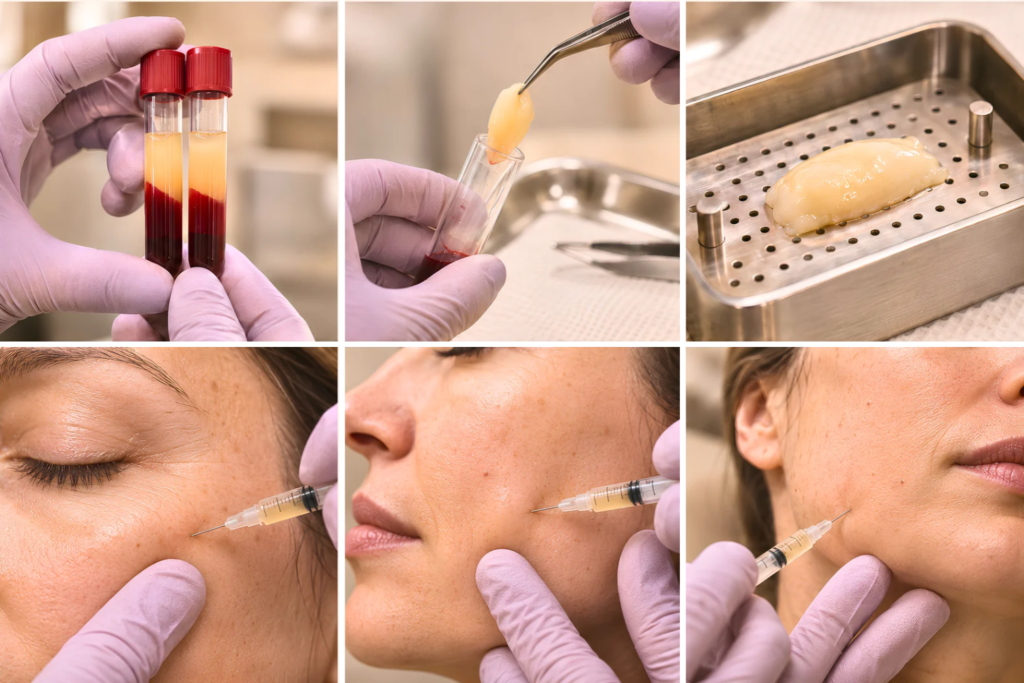
PRF Compression Therapy Procedure
The treatment process involves blood collection, PRF preparation and application according to the selected treatment protocol.
Step 1: Consultation and Assessment
Your healthcare provider evaluates your medical history, treatment goals, skin or tissue concerns and suitability for PRF. The intended treatment area and expected outcomes are discussed.
Step 2: Blood Collection
A small amount of blood is collected from your arm using a sterile blood collection procedure.
Step 3: PRF Preparation
The blood sample is processed in a centrifuge using a specific protocol to separate the desired blood components. Depending on the technique, the fibrin-rich material may be prepared, compressed or handled in a particular way for the intended application.
Step 4: PRF Processing and Treatment Preparation
The PRF material is prepared for use according to the treatment area and clinical technique. Sterile handling and appropriate preparation are important throughout the procedure.
Step 5: PRF Application
The prepared PRF is applied or administered to the designated treatment area using the technique appropriate to the clinical indication.
Step 6: Post-Treatment Guidance
Your healthcare provider provides instructions on aftercare, expected recovery and follow-up appointments based on the treatment performed.
Your PRF Compression Therapy Journey
- Consultation: Discuss your concerns, treatment goals and medical suitability.
- Blood Collection: Collect a small blood sample using sterile equipment.
- PRF Preparation: Process the blood sample to prepare the platelet-rich fibrin material.
- Treatment Application: Apply or administer the prepared PRF according to the selected treatment protocol.
- Follow-Up: Review recovery, treatment response and any additional recommendations.
Aftercare Following PRF Compression Therapy
Aftercare depends on the treatment area and the way PRF has been applied. Your healthcare provider will provide specific instructions to support recovery.
- Keep the treated area clean according to your provider’s instructions.
- Avoid touching, rubbing or applying unnecessary pressure to the treated area.
- Avoid strenuous physical activity for the period recommended by your healthcare provider.
- Avoid excessive heat, sauna or steam exposure if advised.
- Follow your provider’s recommendations regarding skincare, medications and other topical products.
- Avoid applying unapproved products to the treated area.
- Attend scheduled follow-up appointments.
- Contact your healthcare provider if you experience unusual pain, increasing redness, significant swelling, fever or other concerning symptoms.
Possible Side Effects of PRF Compression Therapy
PRF is prepared from the patient’s own blood, but the procedure may still involve side effects or complications depending on the application technique.
Possible side effects may include:
- Temporary redness or swelling.
- Bruising at the blood collection or treatment site.
- Mild tenderness or discomfort.
- Temporary irritation.
- Minor bleeding.
- Infection, although sterile procedures are used to reduce this risk.
- Reactions related to the injection or application technique, where applicable.
Your healthcare provider will discuss the risks, expected recovery and precautions before treatment.
Why Choose Opal Elite Clinic for PRF Compression Therapy?
At Opal Elite Clinic, regenerative treatments are approached with personalized assessment, attention to safety and a focus on patient care.
- Personalized Assessment: Treatment recommendations based on your concerns, medical history and suitability.
- Individualized Treatment Planning: PRF preparation and application considered according to your clinical needs.
- Sterile Treatment Protocols: Careful handling of blood collection and PRF preparation.
- Patient-Focused Care: Clear explanations of the treatment process, expected outcomes and aftercare.
- Follow-Up Support: Guidance throughout the recovery and follow-up process.
- Natural Biological Approach: Use of blood-derived components from your own body as part of selected regenerative applications.
Frequently Asked Questions About PRF Compression Therapy
What is PRF Compression Therapy?
PRF Compression Therapy involves the preparation and use of platelet-rich fibrin, a blood-derived material containing platelets, fibrin and associated biological components. The specific compression or preparation technique depends on the treatment protocol.
What does PRF stand for?
PRF stands for Platelet-Rich Fibrin. It is prepared from the patient's own blood and contains a fibrin matrix along with platelets and other blood components.
How is PRF prepared?
PRF is prepared by collecting a blood sample and processing it using a centrifuge. The resulting material is separated and prepared according to the intended treatment application.
Is PRF Compression Therapy a natural treatment?
PRF is an autologous treatment, meaning it is prepared from the patient's own blood. It uses blood-derived biological components rather than donor-derived platelet material.
Is PRF Compression Therapy painful?
The treatment may involve discomfort during blood collection and, depending on the application, during treatment itself. The level of discomfort varies between individuals and treatment techniques.
Are there any side effects of PRF?
Possible side effects include bruising, swelling, tenderness, redness and minor bleeding. Infection and other complications may occur, depending on the treatment technique and treatment area.
Can veneers cover stained teeth?
Yes. Veneers may help improve the appearance of teeth with persistent discolouration that cannot be adequately addressed through whitening alone.
How long does a PRF treatment session take?
The duration depends on blood collection, PRF preparation and the treatment application. Your healthcare provider will provide an estimated session duration during your consultation.
How many PRF sessions are required?
The number of sessions depends on the treatment indication, clinical protocol, individual response and treatment goals. Some applications may involve a single session, while others may require multiple treatments.
Who should avoid PRF treatment?
Individuals with certain blood disorders, active infections, significant platelet abnormalities, specific medical conditions or other contraindications may not be suitable. A medical evaluation is necessary before treatment.
Is PRF better than PRP?
PRF and PRP are different blood-derived preparations. Their preparation techniques, composition and release characteristics differ. Neither is universally better, and the appropriate option depends on the treatment indication and available clinical evidence.
When can I return to normal activities after PRF?
Many patients may resume routine activities relatively soon, depending on the treatment area and application technique. Your healthcare provider will advise you on activity restrictions and recovery.
How can I book PRF Compression Therapy at Opal Elite Clinic?
You can book a consultation with the healthcare team at Opal Elite Clinic to discuss your concerns, treatment goals and suitability for PRF Compression Therapy.
Explore PRF Compression Therapy at Opal Elite Clinic
Discover whether PRF Compression Therapy may be appropriate for your treatment goals with a personalized consultation at Opal Elite Clinic. Our healthcare team will assess your needs, explain the treatment process and guide you through your options.